

Travelogue and insider perspectives
A day-by-day blog of our cruise ports.
Cruising the coasts of Spain and Portugal
John and Julie sailed on Oceania Insignia around the Iberian Peninsula - from Barcelona to Lisbon - with many amazing stops in between. Below we will tell you about our experience in each stop - what we saw, where we ate, how we liked it.
Barcelona, Spain
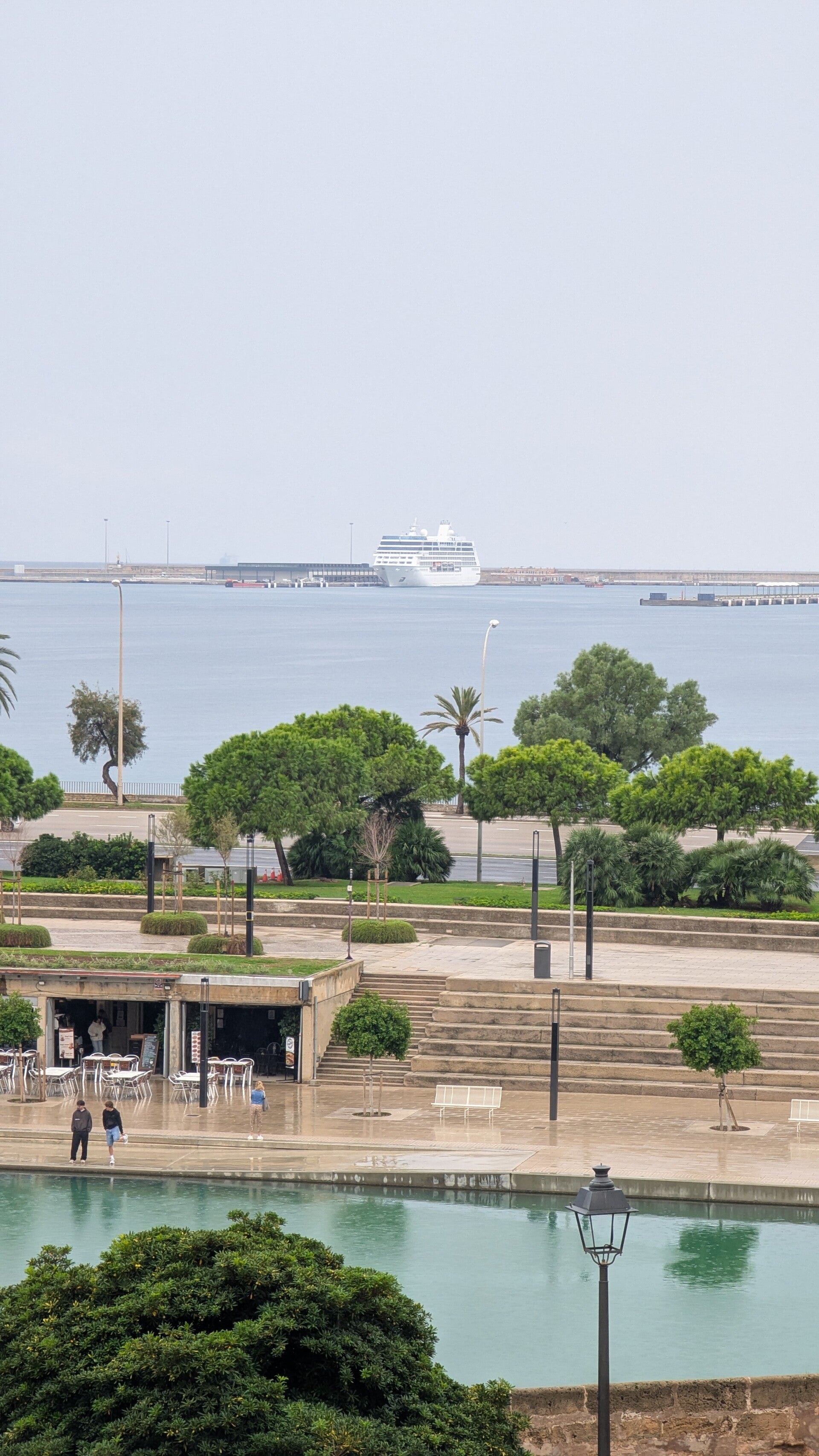
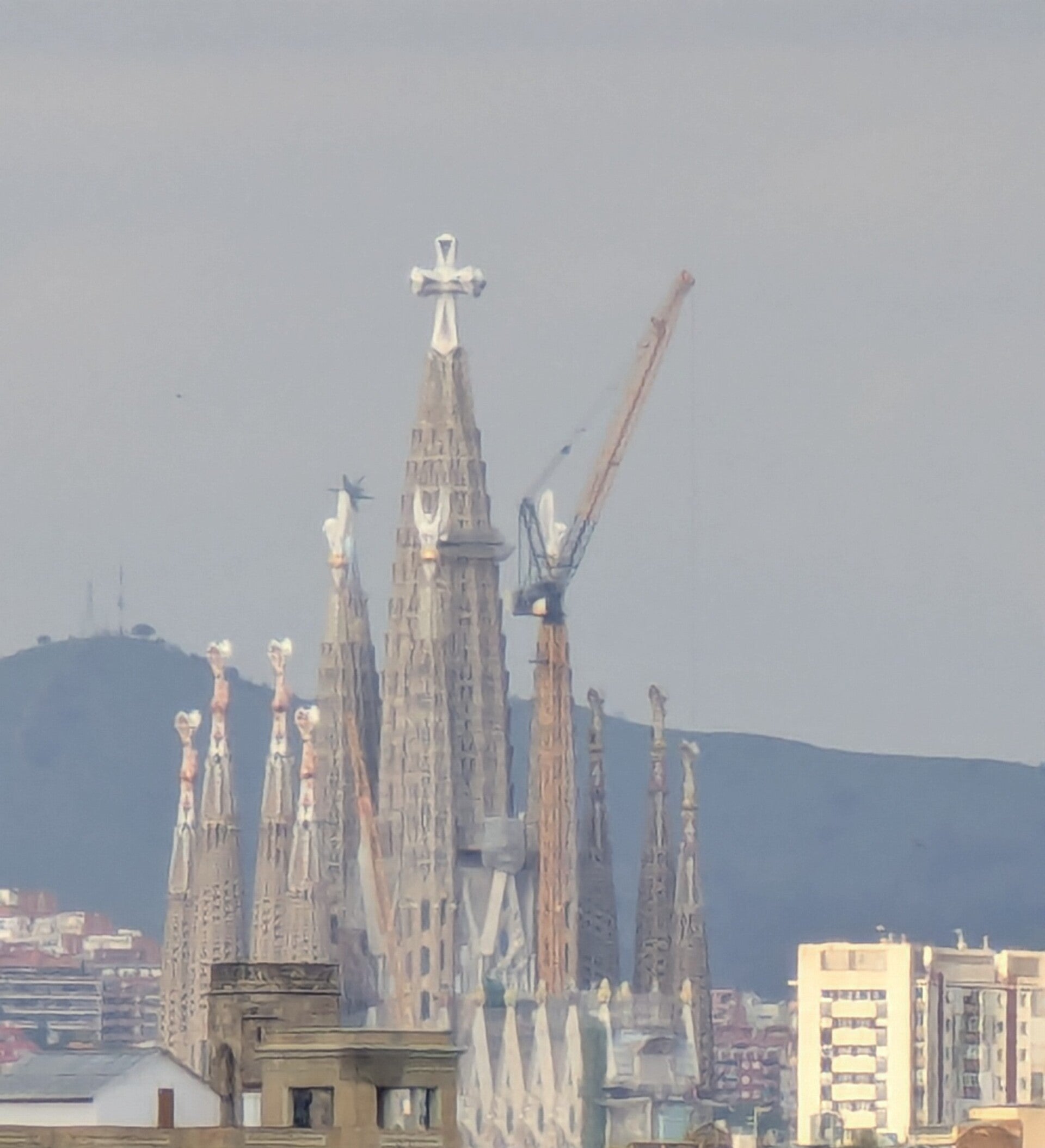
The embarkation port of our trip. We booked our flights as a package with the cruise fare through Oceania. Unfortunately, since this was our first cruise with Oceania, we did not understand their booking process (and our travel agent didn't help, which is one of the reasons we decided to start this business). They booked us to arrive in Barcelona at 8:30am on the day of embarkation. Fortunately, everything went smoothly (except the new EU Entry/Exit System, which we will discuss more below), so we made it to the ship on time. However, we were so exhausted from the long trip that we didn't have the time or energy to venture out and sightsee. Since our ship was docked at the World Trade Center, we were able to get some photos of the Christopher Columbus Monument (fun fact: he's pointing east over the Mediterranean, but it would have been silly to have him point west over the land) and La Sagrada Familia in the distance. It's so huge we could still get a clear shot.
Oceania brought on a local guitar trio that played Flamenco/Jazz style music. So we were still able to get some local flair before we set off for our first port of call: Palma de Mallorca.
Palma de Mallorca, Balearic Islands
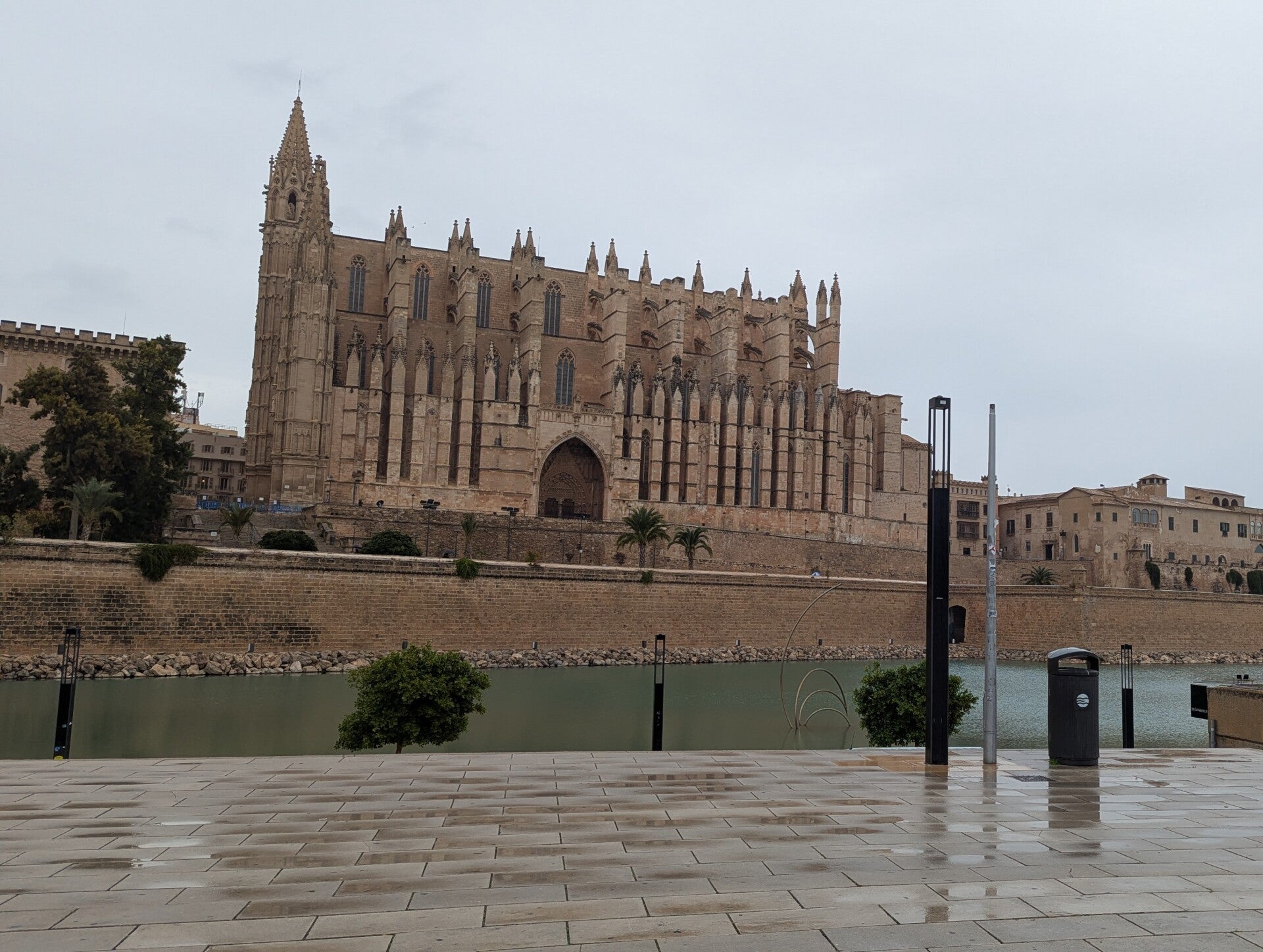
At first I wasn't too keen on Palma, but once I started researching I found it has a lot to offer. The main attraction is the Cathedral of Santa Maria of Palma. It is Gothic, and lives up to that description. It is huge and ornate and beautiful. We toured the inside of the sanctuary. You can also get tickets to climb up to the terraces. Our tickets included a visit to the Museum of Sacred Art, but we had had our fill of sacred art by the time we finished the cathedral itself.
We took a walk through Old Town to find the Arab Baths. It turned out they took cash only and we only had cards. The cashier told us there was an ATM about a 5 minute walk away if we wanted to get cash. We opted to walk back to the waterfront to find something to eat instead.
We ate a lovely restaurant called Enco Gastronomy. Their motto is Gastronomia Con Amor. We got the 5 tapas special for 25 euros and it was worth every centimo. The food was delicious, and the bread was just like the bread John's mother makes. They are right on the corner at Passeig de Sagrera, 1. It was a nice respite.
Alicante, Spain
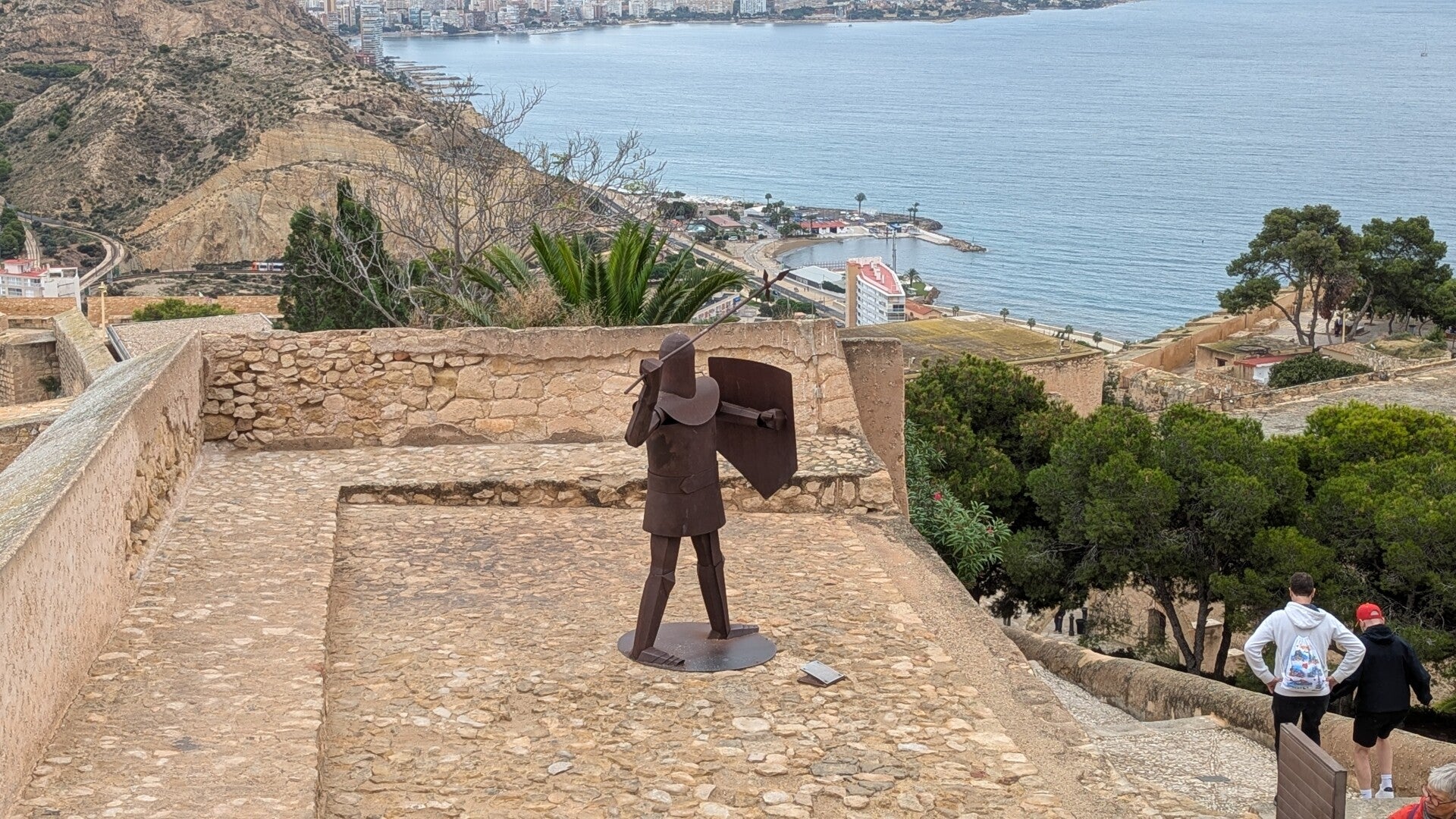
Here we visited the Castillo de Santa Barbara. It is a fortress placed at the top of Mount Benacantil. You can hike up if you choose, or take the lift. We opted for the lift at the price of 2.70 euros per person. Also worth every centimo.
The fortress was interesting and worth a visit, but you should know the terrain is very steep and uneven, with some missing cobblestones. If you have any mobility issues, you should think twice before visiting. In addition, if you have bathroom issues, you should definitely think twice. The only facilities that we found were at the bottom of a steep path with twists and turns. It was quite difficult to locate. I asked two staff, and they very vague directions "to the right at the bottom". It was much farther than that implied. I asked other guests if they had found it, and others had also been in search of, but never found it. I finally attached myself to a group Spanish visitors that were also having difficulty locating the facilities (so it wasn't a language barrier). They were able to figure it out through grit and determination and desperation, so we finally found relief. Whew!
On the way out, we found there we public facilities just across the street from the lift entrance. They were not the best, but will do in a pinch.
Right next door, we found a nice little beachfront restaurant with a view of the Med called Gomiz Alicante at Paseo de Gomiz, 3. We ate patatas bravas (10/10) and drank tinto de verano, which is basically a red wine spritzer. Delish!
Cartagena, Spain
If you love history, Cartagena is a must see. It all started with the Phoenicians, who became Carthaginians, who sailed to the Iberian Peninsula. The name Cartagena actually means New Carthage. The Romans came too.
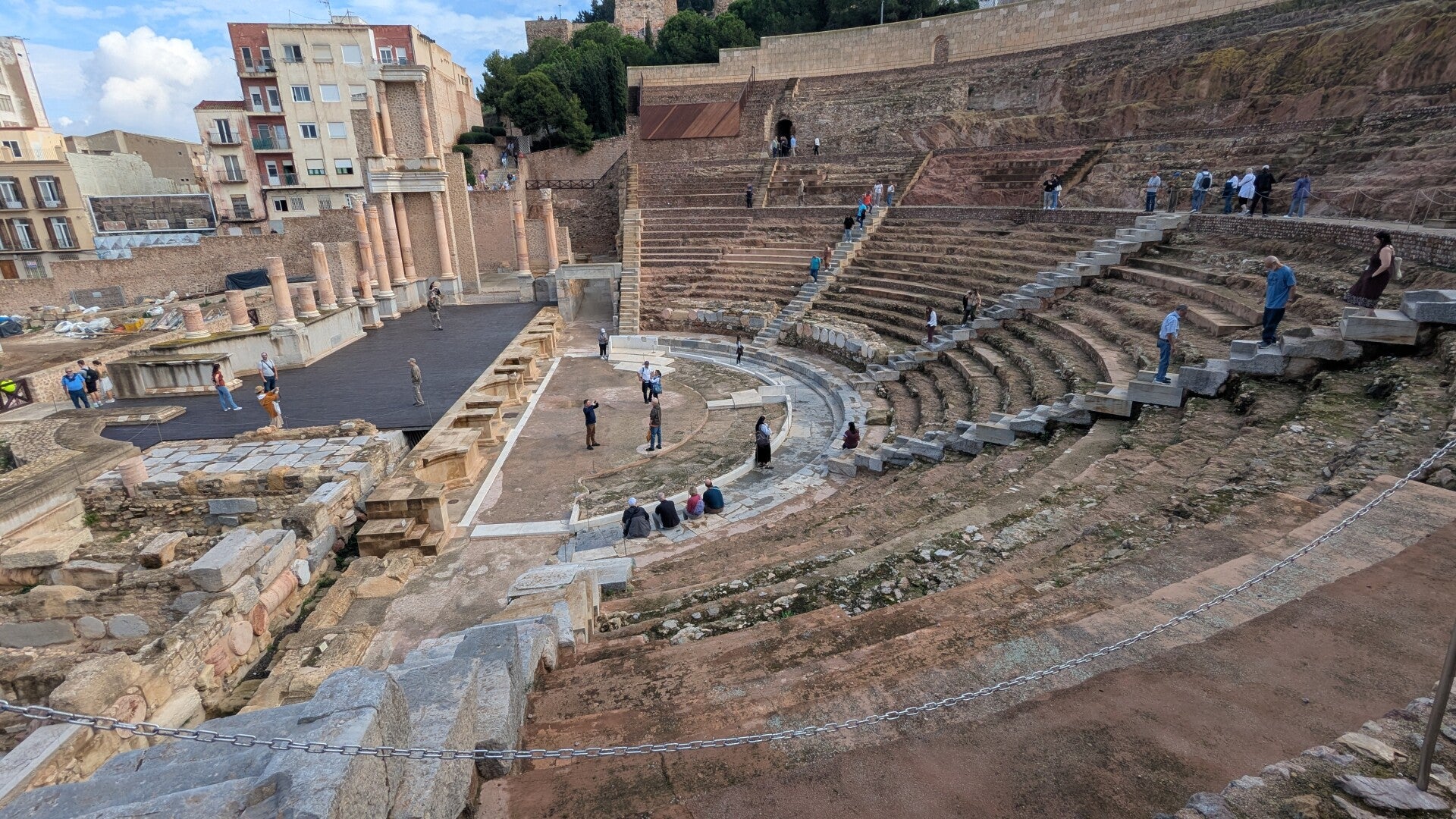
We visited the Museum of the Roman Theater in the main Plaza Ayuntamiento. The plaza is fabulous. Wide, with beautiful paving stones, and fully pedestrian.
The museum has exhibits all about the time of the Romans, and finishes in the actual amphitheater. You can walk down the steps and see for yourself. We opted to stay at the top in safety.
After the museum, we had lunch at a spot called El Pico Esquina - the corner spot. We ate tapas: Pulpo Gallega, Spanish Tortilla, Croquetas, and Manchego cheese with almonds. All delicious! It is located just off the plaza where the locals live. You can find it at Plaza Jose Maria Artes, 1.
We walked to the Panoramic Elevator to see Parque Torres and the Castillo de la Concepcion. The accessible path is long and reasonably uphill. When you get to the entrance path, you may find that last uphill a bit steep. The exit is stairs, so you will have to reverse back to the entrance if you have difficulty with stairs.
Malaga, Spain
Our original plan was to take a bus trip to Granada to visit the Alhambra - a UNESCO World Heritage site. However, the excursion through the cruise ship was booked up and we couldn't get there. We debated taking the "transfer only" excursion, but there were too many unknowns - where would they drop us off and how far would it be from the Alhambra? So we opted to book a different excursion in Granada to see the Cathedral and tombs of Isabella and Ferdinand. Still interesting. Unfortunately, this excursion was cancelled.
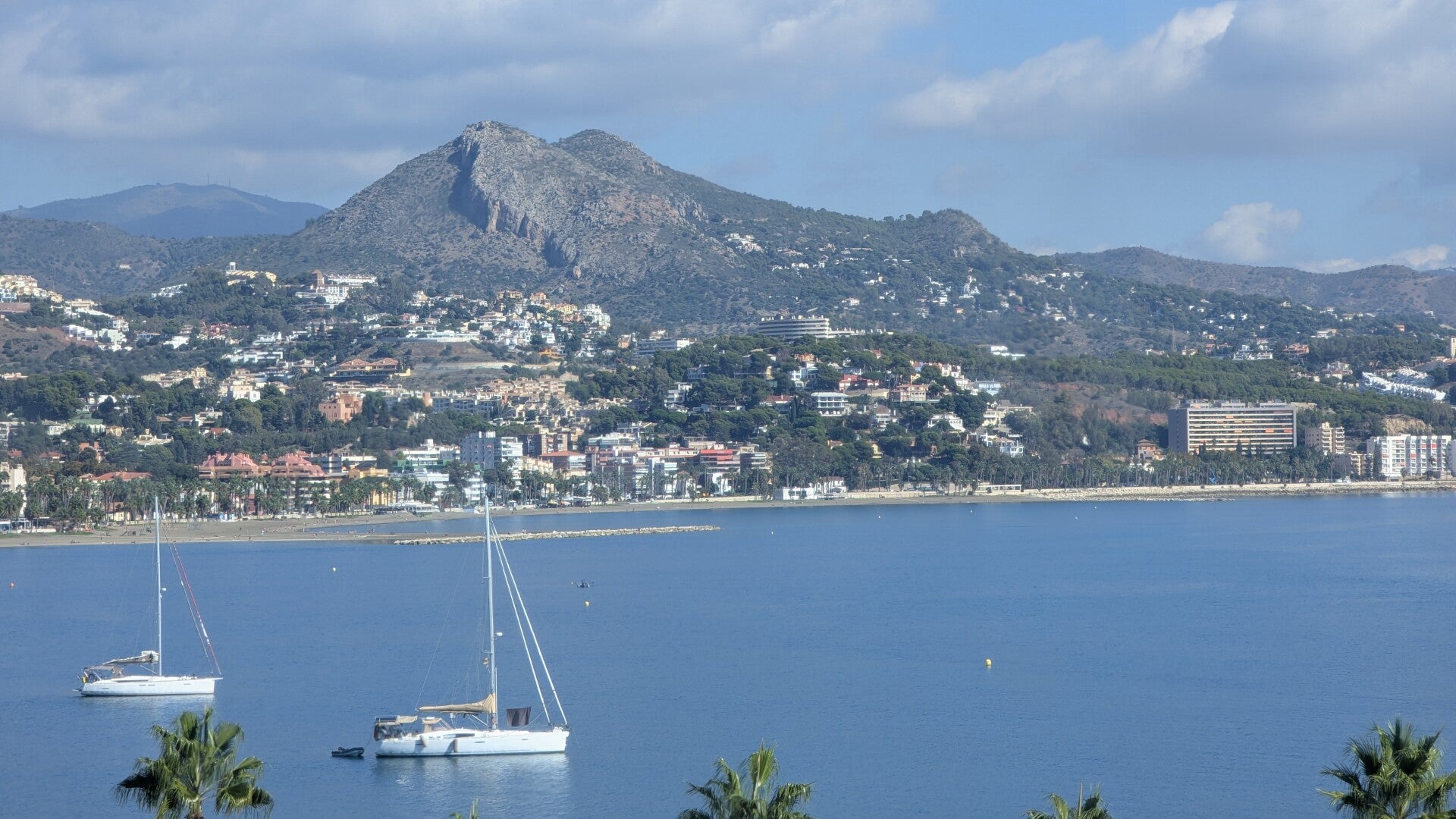
It worked out though, because John became ill overnight and would not have been able to make the trip. So Julie had an adventure in Malaga to find a pharmacy and the Spanish version of Gatorade: Aquarius. It was a good opportunity to practice my Spanish and experience the city. I was surprised at how urban it was. I was expecting another old, small town, but this was a good sized modern city. The population is similar to that of Baltimore. There are beautiful wide sidewalks. I love how these Spanish cities are so pedestrian focused.
I stopped for coffee at a cafeteria. I truly only needed to use the facilities, but ended up sitting with a nice older man who patted the seat next to him while I waited for the bathroom to become available. So I sat and drank my coffee with some locals.
When I went on my way I stopped at a kiosk for the Aquarius, and got some picture postcards. Did you know Malaga is the birthplace of Pablo Picasso?
The shuttle bus stop was next to some gorgeous monuments, so I had a good photo op even though it was a mission-focused visit to Malaga.
Cadiz, Spain
If you love history, you cannot miss Cadiz. It starts with the Phoenicians, who were the first to figure out how to sail in the Strait of Gibraltar between the Rock of Gibraltar and Mount Musa. Known to them as the Pillars of Melqart, or the Gates of Baal. They later became known to the Romans as the Pillars of Hercules.
Cadiz is a hidden gem. There is so much history in this town. We took a bus tour and saw the walls of the city, the churches that were mosques, then churches again. There is a museum that showcases ruins of a Phoenician village.
Our lunch break during the tour took us to the Central Market. Kind of overwhelming for an American, but worth the visit. We stopped at a fry shop and got a packet of fried sardines, plus a sangria and a vermu. John enjoyed the sardines. I tried, but just couldn't.
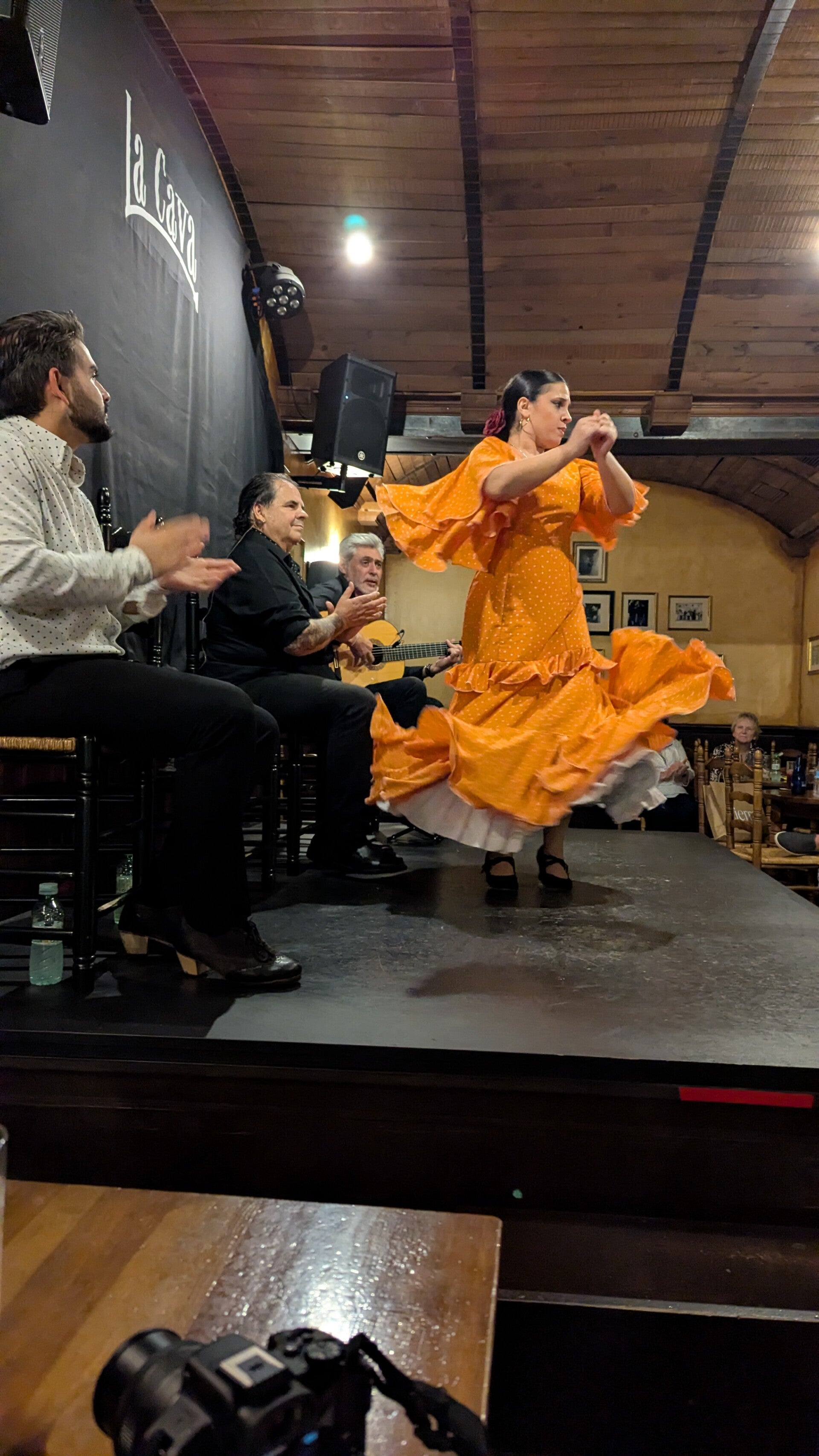
The best part of the day was the Flamenco show (Ole!). This was part of our excursion, since most show start later in the evening. This was a special showing for our tour. You must see a performance in Andalusia, which is the home of flamenco, though it came to Spain via India. Fascinating history. The performance blew us away. We were entranced.
Portimão, Portugal
Portimão is a fishing town. It's all about the sardines.
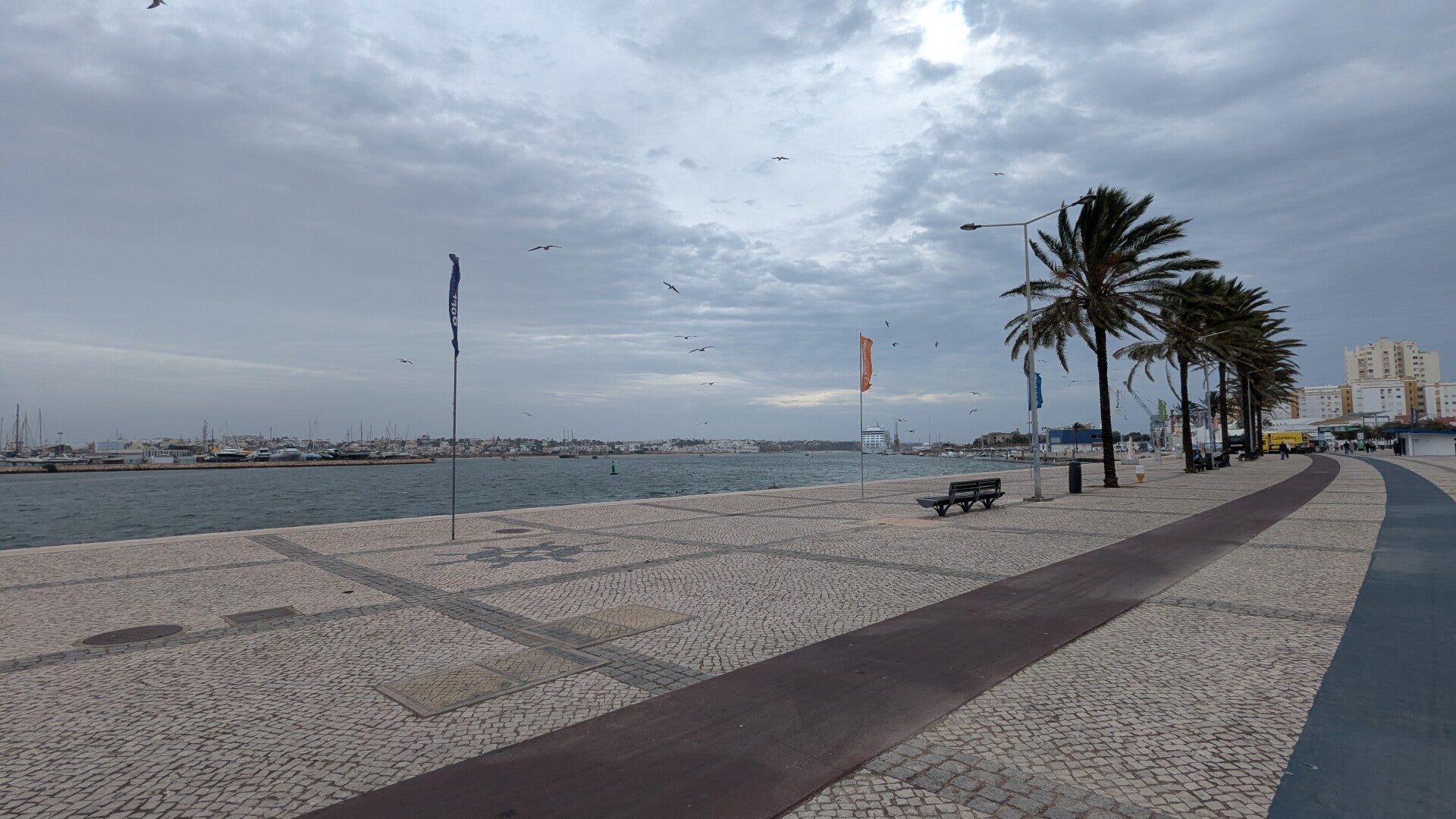
We were there on Sunday, so most of the shops and restaurants were closed. Plus we were under Storm Bruna, which brought high winds and rain.
We visited the Museu de Portimão which is a neat little museum. The building was the sardine processing plant. The exhibits start with prehistoric times in the area, show the shipbuilding history, and of course all about the sardines and the canning process. Fascinating. We came with a variety 4-pack of sardines. Yum!
We strolled the riverwalk which has some unique sculpture installations. I wish we had a better day to visit but it's a nice town. There is a also a beach and caves that can only be accessed by the water. It's a good port of call if you have the right day of the week and weather.